When an attorney needs a document, a date, or a line of testimony, the case manager is the person who finds it. Across a matter's life, that responsibility takes a different shape at every stage: intake, discovery, motion practice, trial, and appeal.
Earlier entries in this series took those stages one at a time. This final entry follows a matter through all of them, because the value of organizing a matter well is cumulative. Work done during discovery becomes the foundation for motion practice. The chronology built over months becomes a resource for witness preparation. The exhibits and testimony organized along the way become the starting point for trial.
The better each stage is organized, the less the team has to reconstruct when the next one begins.
The workspace between review and the file room
Everchron's role is easiest to see by what sits on either side of it.
Traditional e-discovery platforms hold the broad universe of collected and produced material, much of which may never become important to the case. Document management systems hold drafts, revisions, correspondence, and the day-to-day files lawyers create while working.
Everchron sits between them as the team's active case record: the evidence, testimony, filings, facts, and other materials brought forward for substantive case work. Rather than operating against the full review universe, the team works from a curated record centered on what it expects to use.
Material moves directly from review platforms such as Relativity or enters through Everchron's universal bulk importer. The case manager brings forward what matters and organizes it alongside the analysis the team builds around it. Search, tagging, chronology work, witness preparation, and exports then operate against the same working record rather than separate collections assembled for each task.
Intake and the first week
Matter organization starts before anyone is building a chronology or preparing a witness.
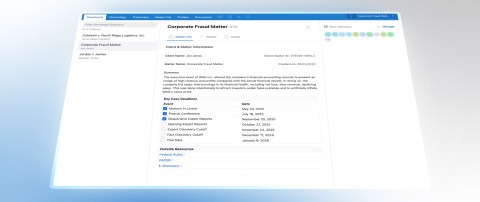
The Everchron Dashboard gives the team a central place for key case dates, contact information, user access, and links to the internal and external resources people need throughout the matter. Setting that up early reduces the routine questions that otherwise arrive in the case manager's inbox.
The first weeks are also when the team begins establishing the structure it will use for the rest of the case: Profiles for important people and entities, Tags for issues and themes, initial document collections, and the conventions that keep the record consistent as it grows. That work may feel administrative at the beginning, but months later it determines whether the team is searching a structured record or reconstructing one under deadline.
Building the record
The first major challenge is deciding which materials deserve to move from the larger review universe into the team's working record.
Finding the Documents That Decide a Case looks at that process in detail: finding the small set of documents that matter within a much larger case file, preserving the team's evolving analysis around them, and making those materials easy to retrieve again.
Once the record begins taking shape, the next challenge is turning it into a usable account of what happened. Building a Case Chronology covers the shift from a static spreadsheet to a living chronology where documents and facts sit alongside the team's analysis and can be viewed as a table, cards, or a visual timeline.
EC:AI shortens the distance between bringing material into the record, understanding it, and turning it into structured case work.
- AI Extraction helps organize incoming documents by extracting key metadata and related Profiles, reducing the manual work required to turn newly added material into a structured case record.
- AI Fact Extraction takes a first pass across the case record and surfaces structured draft facts with the source material that supports them. The team reviews each draft before deciding whether it belongs in the Chronology. Instead of manually transcribing every potentially important event, the case manager spends more time evaluating and organizing what matters.
- Assistant lets the team ask natural-language questions across the matter record and returns answers with citations linked back to the supporting documents and testimony. Threads keep separate lines of inquiry organized as the team's work moves between witnesses, issues, motions, and other areas of the case.
The result is not a one-time organization project. The record and the chronology develop together as the case changes, new evidence arrives, and the team's understanding evolves.
The people in the matter
Documents are one axis of a case. People are another, and the record rarely arrives organized around them.
Everchron Profiles connect the individuals and entities in a matter with the documents, chronology entries, testimony, and other work associated with them. Over time, that creates a person-centered view of a record that may originally have arrived organized by production, custodian, source, or file type.
That structure becomes increasingly valuable as depositions and witness preparation begin. Instead of starting a witness assignment by searching through several repositories, the team already has a body of material associated with that person. If a deposition moves up or an attorney needs a witness package on short notice, the case manager is assembling from work the team has already done rather than beginning a new search from scratch.
Filings, trial, and deliverables
As the matter moves into motion practice and trial preparation, the same organizing work starts producing concrete outputs.
Preparing Filings Under Deadline covers the filing record, exhibit preparation, transcript excerpts, and the work of assembling submission packages while deadlines are moving.
Trial Preparation Without the Last-Minute Scramble looks at the next stage: preparing exhibits, testimony, video clips, and other materials the team will rely on in the courtroom.
Turning Case Materials into Deliverables focuses on the reports, witness materials, portfolios, and exports that turn the organized record into something attorneys can use and share.
What connects all three is dependency.
A filing package comes together quickly because the important documents were already identified and organized. A witness kit is useful because the relevant testimony, exhibits, and Profiles were connected as the matter developed. Trial preparation moves faster because the issues, key documents, and testimony were curated long before anyone started building the final trial set.
The scramble these workflows are designed to avoid is not avoided at trial. It is avoided during discovery.
Appeals and the archive
Appellate work puts a different emphasis on the same record. The team may need to isolate evidence tied to particular claims, defenses, rulings, or witnesses and then go deeper into the individual elements and sub-elements at issue.
Everchron's Tags preserve that structure as the matter develops, allowing the case manager to narrow the existing record around a claim, defense, or component of the case rather than rebuild the organization for appeal.
When the matter finally concludes, Everchron's Full Matter Archive preserves the workspace in a structured format that can be fully restored if the case returns through an appeal, remand, related proceeding, or another future need.
The work of organizing a matter does not disappear. What changes is whether that work has to be repeated. A document identified during discovery becomes part of the chronology. Testimony organized for a motion remains available for witness preparation. Exhibits and analysis assembled for one proceeding remain connected to the record for the next.
By the time a matter reaches its later stages, the team should not be starting over. It should be building on work already done.