
Matter Intelligence
Agentic Chat
Ask questions in plain language from the index or Viewer and get answers grounded in your matter. EC:AI plans the work, gathers the right context, reviews the record, and carries out as many steps as the question requires before assembling a complete, cited response. Whether you are exploring the full matter, comparing testimony, tracing a factual issue, or working within a single document, you can refine the scope, continue with follow-ups, and remain in control of the analysis throughout.
-
Direct EC:AI to the full matter, a filtered set, selected items, specific documents, or related materials such as families and exhibits.
-
Work through multi-step questions, compare evidence and testimony, validate factual assertions, and follow threads across the record.
-
See the plan, sources reviewed, and steps taken, with clickable citations linking every response to the supporting material.
Fact Extraction
Build a deeper factual understanding of your case from the documents and testimony in your matter. EC:AI analyzes the record in context and drafts structured facts with dates, headlines, summaries, related people and entities, and links to the supporting sources. Your team decides what belongs in the chronology, and those review decisions help EC:AI better understand the case and deliver more relevant results over time.
-
Draft structured facts from filings, transcripts, exhibits, and other key evidence.
-
Capture dates, headlines, summaries, related people and entities, and supporting sources.
-
Help EC:AI deepen its understanding of the case through your team’s review decisions, improving the relevance of future results.
Assisted Search
Search your matter in plain language and find the documents, passages, and testimony that match what you are looking for, even when you do not know the exact terms. EC:AI understands the meaning and context behind your request, helping you surface relevant material without building and refining complex search queries. Narrow the scope to the materials that matter, review the results in context, and move directly to the supporting source.
-
Search by concept, issue, event, or description without relying on exact keywords.
-
Narrow the search to a filtered set, selected materials, or a focused body of evidence.
-
Review results in context and jump directly to the relevant passage in the source.
Document Intelligence
Comprehensive Page-Line Summaries
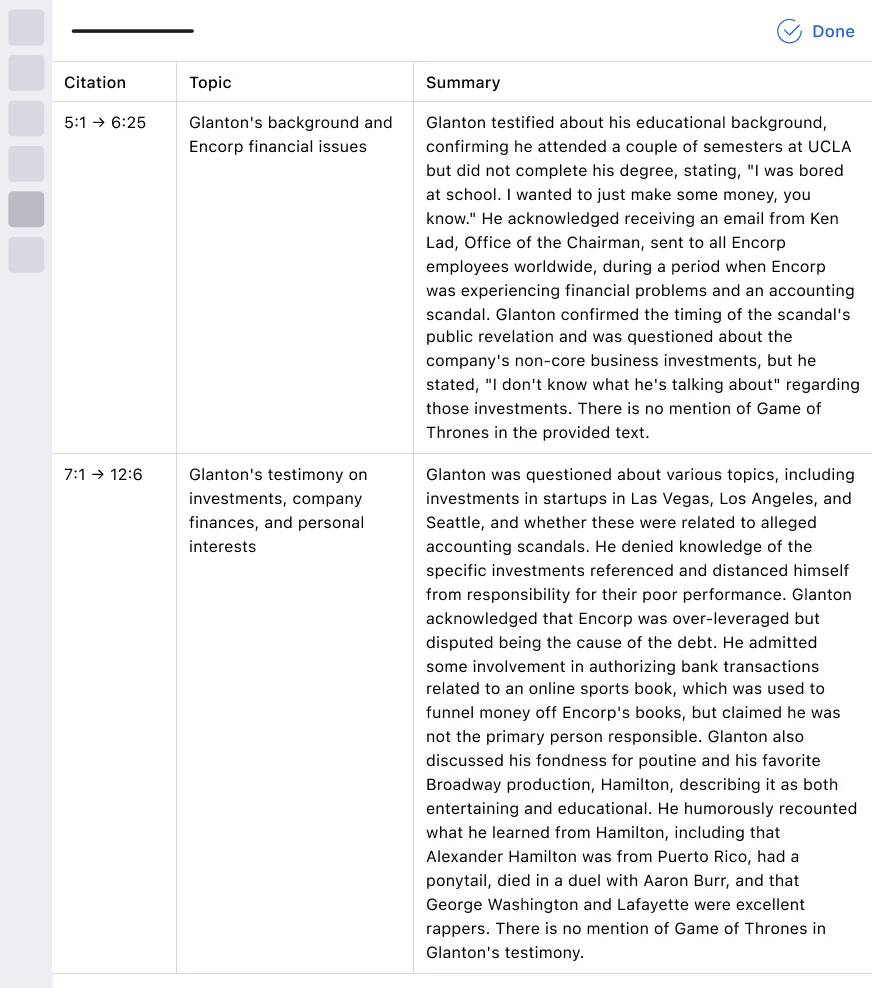
Streamline your transcript review with EC:AI’s Comprehensive Page-Line Summaries. Automatically generate a complete set of citations, topics, and detailed summaries that span the entire proceeding — making it easier than ever to navigate, reference, and analyze depositions, hearings, and trials.
-
Break down the full transcript into structured summary blocks, each tied to its corresponding page-line excerpt.
-
View citations, topics, and detailed summaries for every block in a clean, easy-to-navigate table. Click any summary to instantly jump to that point in the transcript.
-
Adjust the level of detail in your summaries or provide custom instructions to tailor the content for your case team.
Key Metadata & Profile Extraction
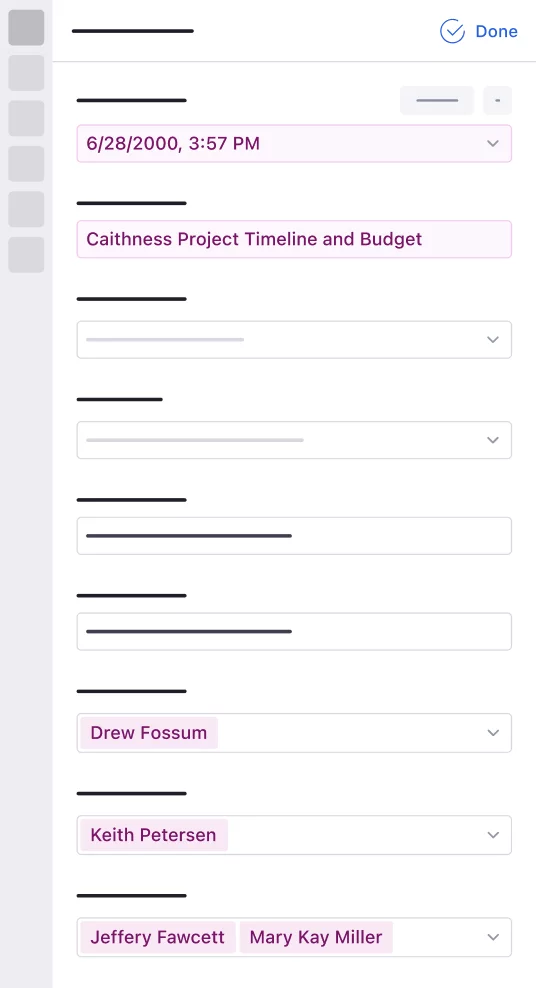
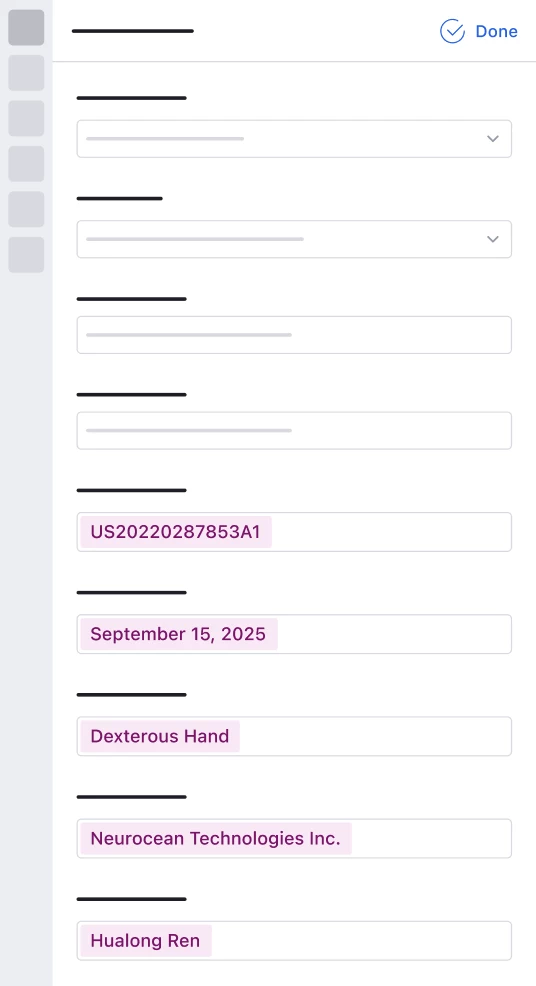
Accelerate your case prep with EC:AI’s advanced Extraction feature. Scan, import, and analyze deposition exhibits and discovery materials while our proprietary AI instantly pulls essential metadata and uncovers the relationships behind your documents.
-
Instantly capture essential metadata—dates, senders, participants, subjects, titles, Bates numbers, and more—directly from your files.
-
Go beyond basic coding: EC:AI auto-detects key people and entities in the text, auto-suggesting profiles to capture vital relationships missed by traditional file processing.
-
Eliminate your tedious manual coding backlog and start analyzing your case materials right away, saving your team valuable time and accelerating case progress.
AI Extraction for Custom Fields
Extract exactly what matters from your documents — at scale. With EC:AI, case teams can define custom fields to capture the details most relevant to their case, from key facts and monetary values to legal analyses like whether a document supports an element of a claim or whether and how it relates to an important issue. Upload or import in bulk, and EC:AI automatically populates your index view with structured, review-ready data for fast scanning, filtering, and analysis.
-
Extract facts, values, or analyses from documents using fields tailored to your case.
-
Process entire uploads or imports in bulk — no manual tagging or coding required.
-
Results populate in the index view, making it easy to scan and sort documents based on extracted content.
AI Summaries for Transcripts
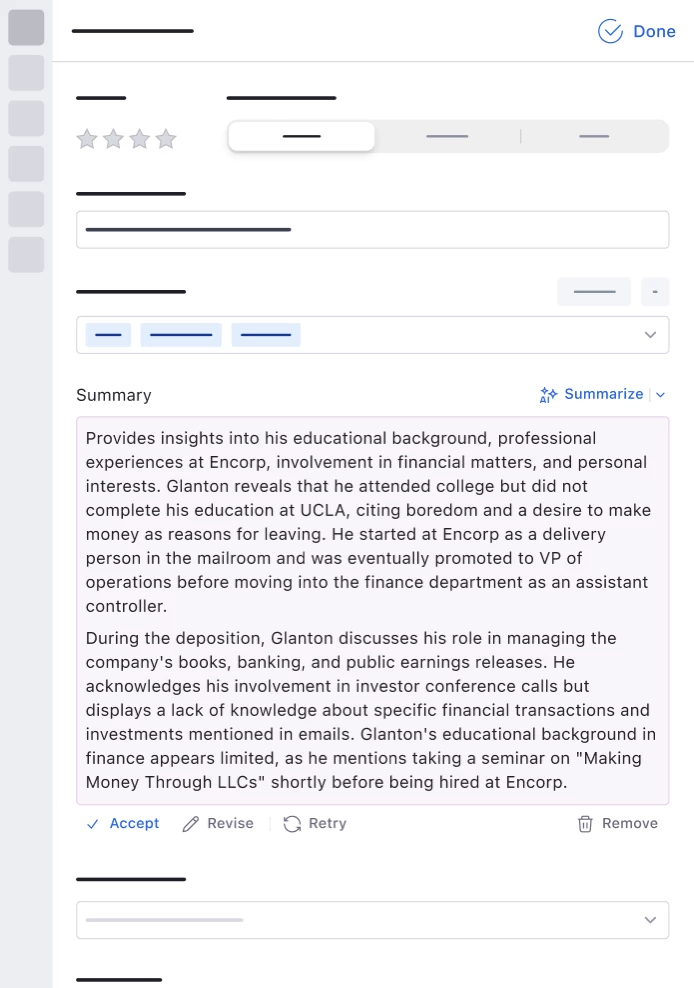
Unlock the full value of your transcripts with EC:AI. Generate clear, concise overviews of key testimony with AI-powered Topic Summaries, or create fully custom summaries guided by your own instructions and focus areas. Whether you need a high-level overview or detailed analysis, EC:AI helps your team quickly understand and act on the record.
-
Instantly produce topic-driven summaries that highlight the essential points of any transcript.
-
Create custom summaries with your own prompts or case-specific guidance to target key issues, people, or claims.
-
Every summary is automatically linked to its transcripts, making it easy to reference, refine, and share as your case evolves.
Chron Summaries
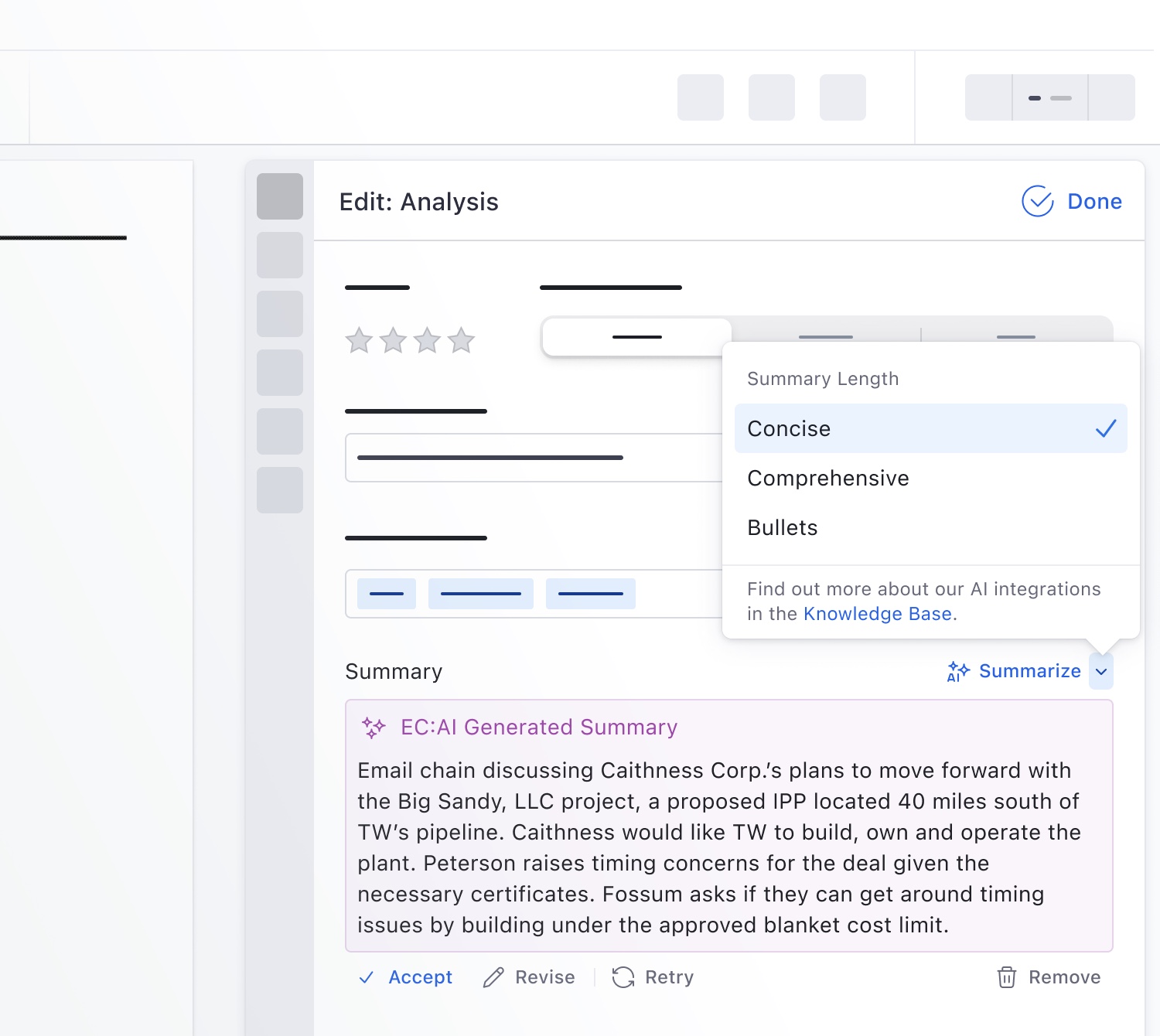
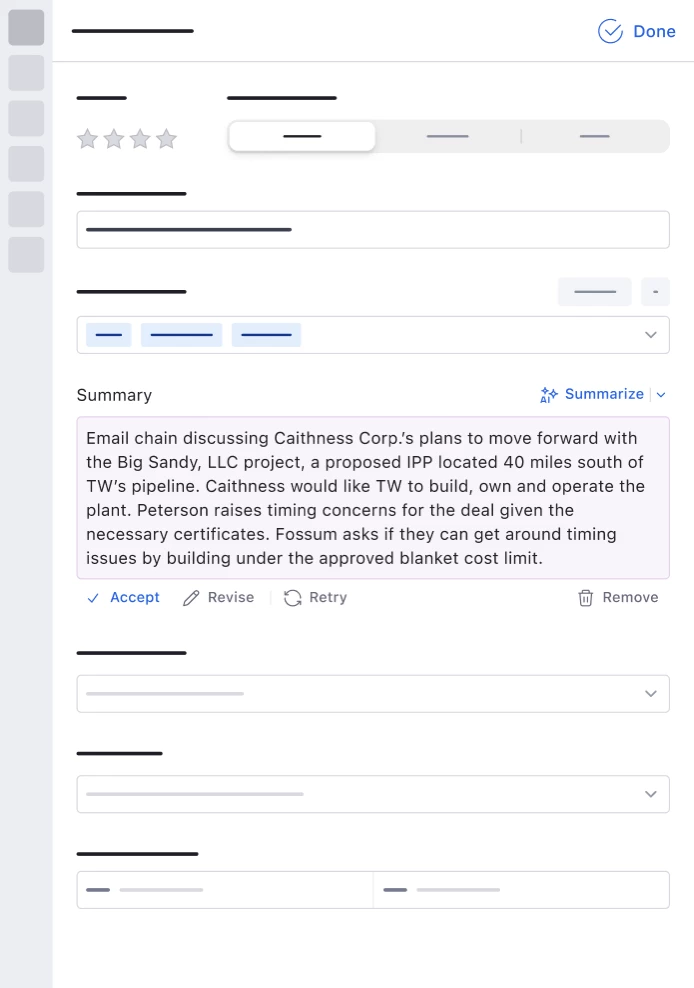
Transform the way you build chronologies with EC:AI. Instantly distill key information from your documents into structured, easy-to-read summaries — perfect for building clear, compelling chronologies at any stage of your matter. Whether you need a quick overview or in-depth insight, our intelligent summarization feature delivers.
-
Choose from preset prompts for accessible summaries, or craft custom prompts for targeted insights and specialized analysis.
-
Accept as is, add to or revise summaries or request new drafts as you see fit.
-
Summaries are automatically linked to their source documents in your chronology, making them easy to review, update, and export.
Secure Control
EC:AI is opt-in at the organization level and configurable matter by matter. Administrators can enable or disable AI for each matter and use granular permissions to determine which users can directly access its features. This gives your organization control over where and how EC:AI is used while allowing teams to adopt it where it adds value.
From Blank Page to First Draft
EC:AI helps solve the blank page problem by giving your team a useful starting point grounded in the materials and instructions you provide. Generate summaries, analysis, and other first drafts, then review, revise, and build on the output to fit the needs of the case. Your team can spend less time assembling an initial draft and more time evaluating the record, refining the work, and developing strategy.
Grounded in the Record
EC:AI keeps its work connected to the materials behind it. Answers, extracted facts, search results, and summaries link back to the relevant documents and transcript passages, making the output easier to verify and review. Your team can move directly from the analysis to the supporting source without losing context.
Clear AI Provenance
Always know which content was generated by EC:AI and which was created by your team. AI-generated summaries, facts, analysis, and other work product are clearly identified throughout the matter, and that distinction carries through when content is exported. This visible provenance makes the work easier to review, evaluate, and use with the appropriate human judgment.